Are Tesla Tires Run Flats Here Is What You Need to Know
Are Tesla tires run flats? The short answer is no. Most Tesla models use standard all‑season performance tires, not self‑supporting run‑flat tires. If you suffer a puncture, you will need to pull over safely and either change the wheel or call for roadside assistance. Understanding your Tesla tire setup helps you stay prepared and avoid surprises on the road. This guide covers everything from tire types and pressure to flat‑tire procedures and maintenance tips.
When you own a Tesla, you expect cutting‑edge technology and a seamless driving experience. One question that comes up often is are Tesla tires run flats. The answer shapes how you handle a flat tire, what you keep in the trunk, and even how you plan long trips. Run‑flat tires let you drive for miles after a puncture, but most Teslas do not come with them. Instead, they use standard performance tires that prioritize ride comfort and efficiency.
Knowing whether your Tesla has run‑flat capability changes your emergency plan. You cannot simply keep driving on a punctured standard tire. You must stop safely and either change the wheel or request help. This article explains everything about Tesla tire construction, what happens when you lose air, and how to stay safe. We also share maintenance tips that help you avoid flats in the first place.
Whether you drive a Model 3, Model Y, Model S, or Model X, the tire information here applies. We break down the differences between standard tires and run‑flat technology, walk through the steps to take when a tire goes flat, and give you practical advice for daily care. By the end, you will feel confident handling any tire situation in your Tesla.
Key Takeaways
- No run‑flat tires: Tesla uses standard tires that offer a comfortable ride but require a spare or roadside help when punctured.
- TPMS alerts you: The Tire Pressure Monitoring System warns you instantly when pressure drops, so you can react quickly.
- Mobile service is available: Tesla can send a technician to swap a damaged wheel with a spare in many cases.
- Regular maintenance matters: Rotating tires and checking pressure every month extends tread life and improves range.
- Know your model: Tire specs vary between Model 3, Model Y, Model S, and Model X, so always check your owner’s manual.
- Prepare a kit: Keep a tire inflator, sealant, and warning triangles in the trunk for emergencies.
📑 Table of Contents
- What Are Run Flat Tires?
- Do Tesla Cars Come With Run Flat Tires?
- What Happens When a Tesla Tire Goes Flat?
- How to Handle a Flat Tire on a Tesla (Step‑by‑Step)
- Comparing Tesla Standard Tires vs Run Flat Tires
- Tesla Tire Maintenance and Longevity
- Expert Insights: Tesla Tire Safety and Performance
- Are Tesla Tires Run Flats? Final Verdict
What Are Run Flat Tires?
Run‑flat tires are specially designed to keep you moving even after a loss of air pressure. They have reinforced sidewalls that support the vehicle’s weight without air inside. This means you can drive for a limited distance—usually 50 to 100 miles—at reduced speed until you reach a repair shop. You do not need to pull over immediately or change a wheel on the side of the road.
Many luxury and performance cars offer run‑flat options because they eliminate the need for a spare tire. That saves space and weight. However, run‑flat tires often provide a firmer ride and can be more expensive to replace. They also cannot be repaired easily if the damage is severe. The reinforced sidewall that makes them run‑flat also means they are more complex and less forgiving on rough roads.
How Run Flat Technology Works
The secret lies in the tire’s construction. Run‑flat tires use either a self‑supporting rubber compound or a support ring embedded in the rim. When pressure drops, the stiff sidewall carries the load. A tire pressure monitoring system (TPMS) alerts you so you know not to drive too far. Most manufacturers limit run‑flat driving to 50 mph and about 50 miles. After that, the tire can be damaged beyond repair.
If you are curious about safety in alternative vehicle types, you might also enjoy our guide on Are Hydrogen Cars Safe. While hydrogen cars use different technology, safety systems like TPMS are a shared priority across all modern vehicles.
Do Tesla Cars Come With Run Flat Tires?
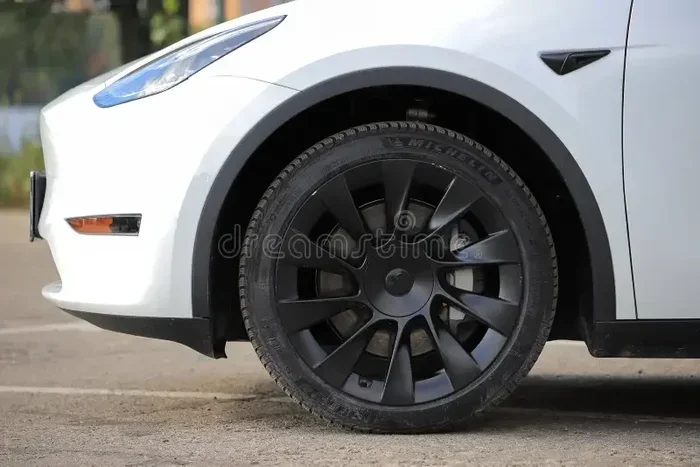
The clear answer is no. Tesla does not equip its vehicles with run‑flat tires. Instead, every Tesla model comes with standard all‑season performance tires. These tires are designed for comfort, low rolling resistance, and quiet operation. They maximize electric range and deliver a smooth ride, which aligns with Tesla’s focus on driver comfort and efficiency.
Because Tesla tires are standard, a puncture means you must stop. You cannot keep driving on a flat. Tesla does not include a full‑size spare wheel in most models. Instead, you get a temporary fix kit or a mobile service option. This is a deliberate choice to save space and weight, which helps maximize range.
Some owners ask if they can retrofit run‑flat tires onto a Tesla. While it is physically possible to mount them, it is not recommended. The suspension and handling are tuned for standard tires. Run‑flat tires would change the ride quality and could affect safety systems. Always stick with the tires specified by Tesla for your model.
Why Tesla Chooses Standard Tires Over Run Flats
Tesla engineers prioritize ride quality and efficiency. Standard tires offer a softer, more compliant feel. They also have lower rolling resistance, which translates into more miles per charge. Run‑flat tires are stiffer and heavier, which would reduce range and make the ride harsher. For an electric vehicle where every mile counts, standard tires are the smarter choice.
Another factor is cost. Run‑flat tires are more expensive to produce and replace. Tesla aims to keep maintenance affordable. Standard tires are widely available and cheaper to swap. If you ever need a replacement, you can visit any qualified tire shop, not just a Tesla service center.
What Happens When a Tesla Tire Goes Flat?
A flat tire on a Tesla is not an emergency if you stay calm. The TPMS will light up on your dashboard the moment pressure drops. You will see a warning that says “Check Tire Pressure” or a specific tire icon. The system uses sensors in each wheel to monitor air levels in real time. This early warning gives you time to find a safe place to stop.
Do not ignore the alert. Driving on a flat tire can damage the wheel and the tire beyond repair. It can also reduce handling and braking performance. Pull over to a flat, stable surface away from traffic. Turn on your hazard lights and set up warning triangles if you have them.
Tire Pressure Monitoring System (TPMS)
The TPMS is your first line of defense. It checks pressure every few seconds. If one tire loses even a few psi, the system warns you. Tesla also shows individual tire pressures on the touchscreen under the vehicle status menu. You can check them before you start driving. Keeping tires at the recommended pressure improves range, handling, and tread life.
Recommended pressure varies by model and tire size. You can find the exact number on the driver‑side door jamb or in the owner’s manual. Typically, it ranges from 42 to 45 psi for most Teslas. Check pressure when the tires are cold, meaning you have driven less than a mile. Temperature changes can affect pressure, so check more often in winter.
Roadside Assistance and Mobile Service
Tesla offers a mobile service team that can come to you. They can swap a damaged wheel with a spare tire or a new wheel if you have a service plan. You can request help through the Tesla app. A technician will arrive with the proper tools and a spare. This service is a huge advantage if you are stranded on a highway or in a parking lot.
Not all Tesla models include a full‑size spare. The Model 3 and Model Y often come with a tire repair kit instead. This kit includes a sealant and a compressor that can temporarily fix small punctures. If the damage is too large, you will still need roadside assistance or a tow.
If you ever need to change a tire at night, proper lighting is essential. For a deeper look at headlight terminology, check out our article on Are High Beams And Brights The Same Thing. Understanding your lights helps you stay safe during any roadside repair.
How to Handle a Flat Tire on a Tesla (Step‑by‑Step)
Knowing the exact steps to take when a Tesla tire goes flat can save you time and stress. Follow this simple procedure whenever you get a puncture.
- Pull over safely. Find a flat, straight stretch of road. Turn on your hazard lights.
- Engage the parking brake. Put the car in Park and turn off the drive.
- Gather your tools. Locate the tire repair kit, the jack, and the lug wrench. They are stored in the trunk under the floor panel.
- Loosen the lug nuts. Before you lift the car, loosen each nut a quarter turn. This keeps the wheel from spinning.
- Jack up the vehicle. Place the jack on the designated lift point near the flat tire. Raise the car until the tire is off the ground.
- Remove the lug nuts and wheel. Pull the wheel straight toward you. Set it aside.
- Mount the spare or repair. If you have a spare wheel, place it on the bolts. Hand‑tighten the lug nuts in a star pattern.
- Lower the car. Slowly lower the jack until the tire touches the ground. Then tighten the lug nuts fully with the wrench.
- Check pressure. If you used a repair kit, drive to a tire shop as soon as possible. Do not exceed 50 mph.
- Call for help if needed. If you do not have a spare or the damage is too big, use the Tesla app to request mobile service or a tow.
Quick Tips for Flat Tire Emergencies
- Keep a flashlight, gloves, and reflective vest in the trunk.
- Practice changing a tire at home so you are familiar with the process.
- Never drive on a flat tire more than a few hundred feet to avoid wheel damage.
- Always carry the Tesla tire repair kit if your model does not have a spare.
Comparing Tesla Standard Tires vs Run Flat Tires
To understand why Tesla sticks with standard tires, it helps to compare them side by side with run‑flat options. The table below highlights the key differences.
| Feature | Tesla Standard Tires | Run‑Flat Tires |
|---|---|---|
| Ride Comfort | Soft, quiet, and smooth | Firmer, harsher on bumps |
| Rolling Resistance | Low, improves range | Higher, reduces range |
| Spare Tire Needed | No (repair kit or mobile service) | No (run‑flat allows driving) |
| Cost of Replacement | Lower, widely available | Higher, specialized |
| Repairability | Can be repaired for small punctures | Often must be replaced |
| Weight | Lighter | Heavier due to reinforced sidewalls |
| Driving After Puncture | Not safe; must stop immediately | Can drive 50–100 miles at 50 mph |
The comparison shows why Tesla’s choice makes sense for an electric vehicle. Standard tires maximize range and comfort, which are core Tesla values. Run‑flat tires trade those benefits for the convenience of driving after a puncture. For most Tesla owners, the trade‑off is not worth it.
Tesla Tire Maintenance and Longevity
Proper care keeps your Tesla tires healthy and helps you avoid flats. A few simple habits can add thousands of miles to your tread life. Here is what you should do regularly.
Check Tire Pressure Monthly
Air pressure slowly leaks through the valve stem and tiny punctures. Check all four tires and the spare (if you have one) at least once a month. Use a reliable digital gauge. The recommended pressure is on the driver‑side door jamb. Keeping pressure within the recommended range improves handling, safety, and energy efficiency.
Rotate Tires Every 6,000–8,000 Miles
Tire rotation ensures even wear. Front tires on Teslas tend to wear faster because of regenerative braking and steering. Rotating them every 6,000 to 8,000 miles extends their lifespan. You can do this yourself with a jack and lug wrench, or have it done at a service center.
Inspect Tread Depth
Good tread is essential for wet and snowy roads. Use a penny test: insert a penny into the tread with Lincoln’s head upside down. If you can see the top of his head, the tread is too worn and you need new tires. Tesla recommends replacing tires when tread depth reaches 4/32 of an inch for optimal safety.
Avoid Road Hazards
Potholes, debris, and sharp objects cause most punctures. Drive defensively and avoid construction zones when possible. If you must drive over debris, slow down and go straight over it. Do not swerve, as that can damage the sidewall.
If you ever need to remove items from the trunk for extra space, you might wonder are car seats easy to take out? We have a helpful guide on that as well. Visit our article on Are Car Seats Easy To Take Out for simple steps to free up cargo room.
Common Mistakes to Avoid
- Ignoring TPMS warnings: A small pressure loss can become a flat tire if you keep driving.
- Overloading the vehicle: Excess weight stresses tires and increases wear.
- Using the wrong tire type: Never mix run‑flat and standard tires on the same axle.
- Skipping alignment checks: Misaligned wheels cause uneven wear and reduce range.
- Driving on a flat: Even a short distance can destroy the tire and the wheel rim.
Expert Insights: Tesla Tire Safety and Performance
Tesla tire engineers design every tire for the specific model’s weight, power, and driving dynamics. The tires are optimized for low rolling resistance, which means less energy wasted and more range per charge. They also provide excellent wet traction and a quiet cabin experience.
Tesla uses tires from major manufacturers like Michelin, Pirelli, and Continental. These are high‑performance all‑season tires that meet strict noise and efficiency standards. The rubber compound is formulated for electric vehicles, which have instant torque and heavier battery packs.
One expert tip is to always install tires with the correct load index and speed rating. Tesla specifies these values for each model. Using a tire with a lower rating can compromise safety and handling. If you are unsure, check the tire information label on the door jamb or ask a Tesla service advisor.
Another insight is to keep your tires clean. Brake dust and road grime can degrade the rubber over time. A gentle tire cleaner and a soft brush will keep them looking good and performing well. Avoid harsh chemicals that can dry out the sidewalls.
Are Tesla Tires Run Flats? Final Verdict
So, are Tesla tires run flats? No, they are not. Tesla uses standard all‑season performance tires that deliver a comfortable, efficient ride. When a puncture happens, you must stop and either use a repair kit or call for help. This is a trade‑off for better ride quality, lower cost, and longer range.
Being prepared makes all the difference. Keep a tire inflator and sealant in the trunk. Know where your spare tools are. Check pressure regularly. And remember that Tesla mobile service is just an app away. With the right knowledge and a little preparation, a flat tire will not ruin your day.
Take a few minutes today to review your Tesla’s tire setup. Check the pressure, locate the jack, and familiarize yourself with the repair kit. A little preparation goes a long way toward safe, worry‑free driving.
Frequently Asked Questions
Can I put run‑flat tires on my Tesla if I want the extra safety?
Technically you can mount run‑flat tires on a Tesla, but it is not recommended. Tesla’s suspension and handling are tuned for standard tires. Run‑flat tires would make the ride harsher, reduce range, and could affect safety systems. Always use the tire specifications recommended by Tesla for your model.
How far can I drive on a flat Tesla tire?
You should not drive any distance on a flat standard tire. Doing so can destroy the tire and damage the wheel rim. Pull over immediately and use the repair kit if the puncture is small, or call Tesla mobile service for a wheel swap.
Does Tesla provide a spare tire with every model?
Most Tesla models do not include a full‑size spare. The Model 3 and Model Y typically come with a tire repair kit that includes a sealant and compressor. Some Model S and Model X trims may include a spare wheel. Check your owner’s manual for the exact equipment in your vehicle.
How often should I check my Tesla tire pressure?
Check tire pressure at least once a month and before long trips. Cold tires give the most accurate reading. The recommended pressure is listed on the driver‑side door jamb. Keeping pressure correct improves range, handling, and tire longevity.
What is the cost of replacing a Tesla tire?
Replacement cost varies by model and tire size. Standard Tesla tires typically range from $200 to $350 per tire. Run‑flat tires, which you would not normally use, cost more. Tesla service centers and authorized tire shops can provide exact pricing for your specific tire.
Can I repair a punctured Tesla tire myself?
Yes, if the puncture is small and in the tread area, you can use the tire repair kit that comes with your Tesla. The kit includes a sealant and a portable inflator. For larger punctures or sidewall damage, you will need a professional tire shop or Tesla mobile service to replace the tire.