How to Carry 4×8 Plywood in a Car Without Breaking It
Carrying a 4×8 plywood sheet in your car might seem tricky, but it is totally doable with the right approach. Whether you are heading to the hardware store or hauling sheets for a home project, knowing how to carry 4×8 plywood in a car safely keeps your material and your vehicle intact. This guide covers every method, from roof racks to interior tricks, so you can transport plywood without cracks, scratches, or wasted trips.
You just picked up a beautiful sheet of 4×8 plywood from the store. It is a perfect size for your next project. But now you are standing next to your car, staring at that big flat sheet, thinking, “How on earth am I going to fit this inside?”
Do not worry. You are not the first person to face this challenge, and you certainly will not be the last. How to carry 4×8 plywood in a car is a question that comes up in every DIYer’s life. Whether you drive a sedan, SUV, or pickup truck, there is a way to get those sheets home safely. The key is knowing your options and using the right technique.
In this guide, we will walk you through every method, tip, and trick you need. You will learn how to load plywood inside your vehicle, how to secure it on the roof, and how to avoid common mistakes that lead to damaged material or even accidents. By the end, you will feel confident hauling plywood like a pro.
Key Takeaways
- Measure your car first: Knowing your trunk, cargo space, and roof dimensions saves time and prevents damage.
- Use a roof rack or lumber carrier: These are the safest and most common ways to haul 4×8 plywood on a vehicle.
- Always secure the sheet tightly: Loose plywood during driving is a serious safety hazard and can cause accidents.
- Protect the edges and surfaces: Padding and edge guards prevent scratches, splinters, and dents on both the wood and your car.
- Drive carefully with bulky loads: Slow down, avoid sharp turns, and check your mirrors frequently when hauling large sheets.
📑 Table of Contents
- Why Transporting 4×8 Plywood Is Tricky
- How to Carry 4×8 Plywood in a Car: Inside the Vehicle
- How to Carry 4×8 Plywood in a Car on the Roof
- Protecting the Plywood During Transport
- Safe Driving Tips When Hauling Plywood
- Common Mistakes to Avoid When Carrying Plywood
- Expert Tips for Hauling Plywood Like a Pro
- Quick Tips Summary
- Conclusion
Why Transporting 4×8 Plywood Is Tricky
A standard 4×8 plywood sheet is eight feet long and four feet wide. That is a huge surface area. Most cars have a trunk or cargo area that is much smaller than that. Even large SUVs often struggle to fit a full sheet inside without folding down the rear seats. And if you try to cram it through a narrow trunk opening, you risk bending or cracking the plywood.
Then there is the weight factor. A single sheet of 4×8 plywood can weigh between 40 and 80 pounds depending on the thickness and wood type. That is a heavy, awkward load to lift and position. Add in the fact that plywood edges are fragile and prone to chipping, and you can see why this is a task that requires some planning.
The good news? With the right preparation, hauling plywood does not have to be stressful. A little bit of knowledge goes a long way toward protecting your investment and your vehicle.
How to Carry 4×8 Plywood in a Car: Inside the Vehicle
Check Your Car’s Interior Dimensions First
Before you buy or pick up any plywood, measure your car’s cargo area. You need to know the length, width, and height of your trunk or back seat space. For most sedans, the trunk is too short for a full 4×8 sheet. However, many SUVs and hatchbacks can fit a sheet if you fold down the rear seats.
Here is a quick way to check. Open your rear seats and lay them flat. Measure from the back of the cargo area to the front seats. If you have at least eight feet of flat floor space, you can fit a 4×8 sheet inside. Make sure the width is at least four feet as well.
Pro tip: Some cars have a narrow trunk opening but a wide open area once the seats are down. Do not assume the trunk opening size is the same as the cargo floor size. Always measure both.
Folding Down the Rear Seats
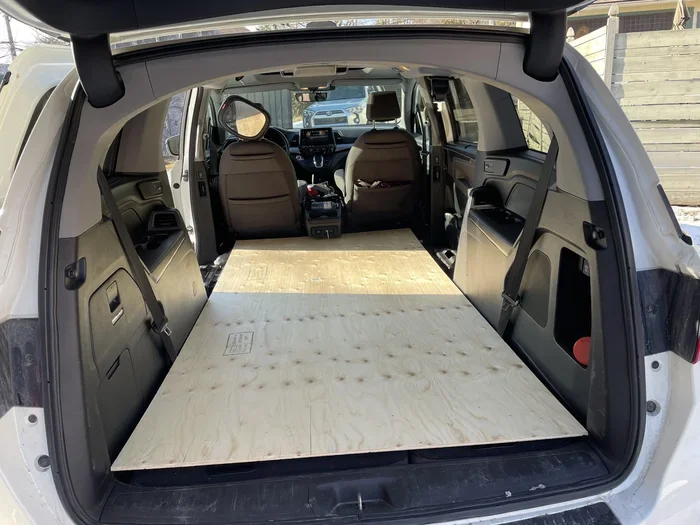
If your car allows the rear seats to fold flat, this is your best option for interior hauling. Most SUVs, crossovers, and hatchbacks have a fold-down seat feature. Once the seats are flat, you have a continuous floor space that can often accommodate a full 4×8 sheet.
Place the plywood sheet flat on the cargo floor. If the sheet is slightly too long, you can let one end rest against the front seats. Just make sure it does not block your view or interfere with the driver’s ability to operate the vehicle safely.
For added protection, lay down a moving blanket or old towel on the cargo floor first. This prevents scratches on both the plywood and your car’s interior. It also provides a bit of cushioning that reduces the risk of edge damage during transport.
Using a Cargo Barrier or Net
If you are placing plywood inside the passenger area, a cargo barrier is a smart addition. A cargo barrier is a mesh or net barrier that sits behind the front seats. It keeps the plywood sheet from sliding forward into the cabin during sudden stops or turns.
Cargo barriers are especially important if you have passengers in the back seat. You do not want a heavy sheet of plywood shifting during a drive. This is a simple safety step that many people overlook when loading plywood into their vehicle.
How to Carry 4×8 Plywood in a Car on the Roof
Using a Roof Rack
The most popular way to haul plywood is on the roof using a roof rack. Almost all cars can be fitted with a roof rack, whether you have crossbars already installed or need to add them. A roof rack gives you the full eight-foot length of the sheet without worrying about interior space.
Start by placing the plywood sheet on top of the roof rack. Center it as much as possible. If the sheet overhangs the front or back of the car, make sure the overhang does not exceed local laws. In many places, you can have up to three feet of overhang in front and four feet in the back, but rules vary by state and country.
Use roof straps or tie-downs to secure the sheet tightly. You want at least two straps on each side. Crank them snug so the plywood cannot shift in the wind or during turns. Double-check everything before you start driving.
Using a Plywood Rack or Lumber Carrier
A dedicated plywood rack or lumber carrier is a specialized accessory that makes roof hauling even easier. These racks clamp onto your existing roof rails or crossbars and hold the plywood sheet securely in place. They often have padding to protect the sheet from scratches.
Lumber carriers come in different sizes. Some are designed specifically for 4×8 sheets, while others can handle longer or wider loads. If you haul plywood frequently, investing in a quality lumber carrier is worth every penny. It saves time and gives you peace of mind on every trip.
When using a lumber carrier, make sure the clamps or straps are tight. A loose sheet on the roof is extremely dangerous. It can fly off at highway speeds and cause a serious accident.
Securing Plywood Without a Roof Rack
Not every car has a roof rack. But that does not mean you cannot haul plywood on the roof. You can use a roof bag or a foam pad to protect the car’s roof surface, then tie the plywood directly to the roof using strong ratchet straps.
Wrap the straps around the sheet and anchor them to fixed points on the car. Many vehicles have tow hooks, door frames, or other strong anchor points that can hold the weight. Just be careful not to scratch the paint. Use a protective layer between the straps and the car surface.
This method works best for short trips at lower speeds. If you are driving long distances or on highways, a proper roof rack is the safer choice.
Protecting the Plywood During Transport
Edge Protection Matters
Plywood edges are the most vulnerable part of the sheet. They can chip, crack, or splinter easily during transport. To prevent this, use edge protectors or wrap the edges with foam padding.
You can buy foam edge protectors at most hardware stores. They are inexpensive and easy to apply. Simply wrap them around all four edges of the sheet and secure them with tape or straps. This small step can save you from coming home with a damaged sheet.
If you do not have foam protectors, even a layer of old blankets or towels wrapped around the edges will help. The goal is to prevent direct contact between the plywood corners and hard surfaces like roof racks or car walls.
Covering the Plywood Sheet
If you are transporting plywood on the roof, cover the top surface with a tarp or moving blanket. This protects the sheet from rain, dirt, and debris. It also reduces wind resistance, which makes your car more fuel efficient and stable while driving.
Use bungee cords or additional straps to keep the cover in place. A loose tarp flapping in the wind is its own safety hazard. Make sure the cover does not block your rear visibility or cover your license plate and tail lights.
Avoiding Moisture Damage
Plywood is susceptible to moisture damage. If it gets wet during transport, the sheet can warp, swell, or develop mold. Always check the weather forecast before heading out with a load of plywood.
If rain is in the forecast, wrap the sheet in a waterproof tarp. For interior transport, make sure the cargo area is dry and free of any standing water. A little extra protection goes a long way toward keeping your plywood in perfect condition.
Safe Driving Tips When Hauling Plywood
Drive Slower Than Normal
A heavy, bulky load changes the way your car handles. Your vehicle becomes heavier, and the center of gravity shifts upward if the load is on the roof. This means you need more time and distance to stop, and you are more prone to rolling in sharp turns.
Drive at or below the speed limit. Avoid sudden braking and sharp steering movements. The smoother you drive, the safer your load stays in place and the better your car handles the road.
Check Your Mirrors Frequently
A large sheet of plywood on the roof can block your rearview mirror or side mirrors. Before you start driving, make sure you can still see clearly in all directions. If your mirrors are obstructed, use a blind spot mirror or have a passenger watch for traffic.
Check your mirrors every few minutes during the drive. If the load starts to shift, pull over safely and re-secure it. It is always better to stop and fix a problem than to keep driving with an unstable load.
Avoid Highways When Possible
Highway driving with a large plywood load can be risky due to high speeds and strong crosswinds. If your trip is short, consider taking surface streets or local roads instead. The lower speeds are safer, and you have more control over your vehicle.
If you must drive on the highway, keep a generous following distance from the car ahead of you. Give yourself extra room to brake. And avoid driving in strong wind or stormy conditions if you can help it.
Common Mistakes to Avoid When Carrying Plywood
Skipping measurements. Many people assume their car can fit a 4×8 sheet without checking. This leads to wasted trips, damaged sheets, and a lot of frustration. Always measure first.
Using weak straps. Not all straps are created equal. Cheap, thin straps can snap under the weight and wind pressure of a plywood sheet. Use heavy-duty ratchet straps or thick tie-downs rated for at least 500 pounds of tension.
Overloading the roof. Your car has a maximum roof weight capacity. Exceeding it can damage the roof rack, compromise the car’s handling, and even cause the roof to collapse. Check your vehicle’s owner manual for the roof weight limit before loading heavy sheets.
Ignoring local laws. Overhang limits, load securing requirements, and special permits for oversized loads vary by location. Check your local regulations before hauling plywood on the roof to avoid fines or safety issues.
Forgetting to check the load during the trip. Straps can loosen over time, especially on bumpy roads. Plan a quick stop to re-tighten your straps after the first few miles of driving.
Expert Tips for Hauling Plywood Like a Pro
Use two people whenever possible. Lifting and positioning a 4×8 plywood sheet is a two-person job. One person can hold and guide while the other secures the load. This reduces the risk of injury and makes the process much smoother.
Invest in a good set of ratchet straps. A quality set of ratchet straps costs around $20 to $30 and can be reused for many trips. They are the single most important piece of equipment for plywood transport on a roof rack.
Label your sheets. If you are carrying multiple sheets, label them by size or project name. This makes it easier to find the right sheet when you arrive at your destination without having to unload everything.
Keep a moving blanket in your car. Moving blankets are versatile and inexpensive. They protect your car’s interior, cushion your plywood, and can even serve as a work surface when you arrive. They are a must-have for any DIYer who hauls materials regularly.
Consider a roof cargo bag. Soft roof cargo bags are a great alternative to hard roof racks. They are cheaper, easier to store, and provide a padded surface for your plywood. Just make sure the bag is rated for the weight of your load.
Quick Tips Summary
- Measure your car’s cargo area and roof dimensions before buying or picking up plywood.
- Fold down rear seats in SUVs and hatchbacks to fit full sheets inside the cabin.
- Use a roof rack or lumber carrier for the safest and most secure exterior transport.
- Secure the sheet with heavy-duty ratchet straps on all sides.
- Pad the edges and cover the top surface to prevent damage during the drive.
- Drive slower than normal and avoid sudden movements with a bulky load.
- Re-check straps after the first few miles to make sure everything is still tight.
Conclusion
Carrying a 4×8 plywood sheet in your car does not have to be a headache. With the right preparation, equipment, and driving habits, you can transport plywood safely and without any damage. The key is to plan ahead, secure the load properly, and protect both the sheet and your vehicle.
Whether you choose to haul plywood inside the car, on the roof with a rack, or with a lumber carrier, the most important thing is that the load is stable and secure. Take the time to measure, pad, and strap everything down before you hit the road.
Now that you know how to carry 4×8 plywood in a car the right way, you are ready for your next project. Grab your sheets, load them up safely, and get to work. Happy building!