What Is Acceptable Tongue Weight for Trailer Towing
Acceptable tongue weight is typically 10 to 15 percent of your trailer’s total gross weight. Getting this ratio right is essential for safe towing, stable handling, and preventing dangerous trailer sway. This guide breaks down everything you need to know about tongue weight, from how to measure it to common mistakes that cause imbalance.
Towing a trailer opens up a world of possibilities. Whether you are hauling a boat, a travel trailer, or a utility trailer, one factor determines how safe and stable your tow will be. That factor is tongue weight. Many drivers overlook this critical number, and it leads to serious problems on the road. Understanding acceptable tongue weight is not just helpful knowledge. It is essential safety information that every tow vehicle owner should have.
So, what exactly is tongue weight, and why does it matter so much? Simply put, tongue weight is the downward force your trailer puts on your tow vehicle’s hitch. Think of it as the pressure pushing down on the hitch ball. If this force is too low or too high, your vehicle handles poorly. You might experience dangerous trailer sway, reduced braking performance, or even a blown tire. This guide will walk you through everything you need to know about finding the right tongue weight for towing.
The good news is that calculating and adjusting tongue weight is straightforward once you understand the basics. You do not need to be a mechanic or a towing expert. With a few simple tools and some basic knowledge, you can ensure your setup is safe and road-ready. Let us dive into the details.
Key Takeaways
- 10 to 15 percent rule: Tongue weight should fall between 10 and 15 percent of your trailer’s gross trailer weight for safe towing.
- Too little weight is dangerous: Insufficient tongue weight can cause trailer sway, loss of steering control, and jackknifing.
- Too much weight is risky too: Excessive tongue weight overloads your tow vehicle’s rear axle and reduces front-wheel traction.
- Use a tongue weight scale: A dedicated hitch weight scale or a bathroom scale setup gives you accurate measurements every time.
- Weight distribution hitches help: They redistribute tongue weight across all axles for better balance and stability.
- Check your vehicle’s specs: Always verify your tow vehicle’s payload capacity and gross vehicle weight rating before hauling.
- Load placement matters: Where you place cargo on the trailer directly affects your tongue weight and overall safety.
📑 Table of Contents
- What Is Tongue Weight and Why Does It Matter?
- What Is the Acceptable Tongue Weight Percentage?
- How to Measure Your Tongue Weight
- What Happens When Tongue Weight Is Too Low?
- What Happens When Tongue Weight Is Too High?
- How to Adjust Your Tongue Weight
- Tools and Accessories That Help Manage Tongue Weight
- Common Mistakes People Make With Tongue Weight
- Expert Insights on Tongue Weight Management
- Final Thoughts on Acceptable Tongue Weight
What Is Tongue Weight and Why Does It Matter?
Tongue weight is the vertical force exerted by the trailer coupler on the hitch ball of your tow vehicle. It is the downward pressure at the front of the trailer where it connects to your vehicle. This force plays a huge role in how your vehicle and trailer combination handles on the road. Without proper tongue weight, even a perfectly loaded trailer can become a hazard.
The Physics Behind Tongue Weight
Here is how it works in simple terms. Your trailer has a total weight distributed across its axles and its tongue. The tongue is the part that extends forward and connects to your vehicle. The weight pressing down on the hitch is the tongue weight. When everything is balanced, your tow vehicle sits level, your trailer tracks straight, and both vehicles handle predictably.
But when tongue weight is off, problems start quickly. Too little tongue weight means the trailer wants to push the back of your vehicle around. Too much tongue weight lifts the front of your tow vehicle, reducing steering control and front brake effectiveness. Both scenarios are dangerous, especially at highway speeds or in windy conditions.
How Tongue Weight Affects Towing Safety
Safe towing depends on balance. Your trailer hitch weight affects several critical systems on your tow vehicle:
- Steering: Proper tongue weight keeps your front wheels planted on the road. This gives you responsive steering and control.
- Braking: Your tow vehicle’s brakes are designed for a specific total weight. Too much tongue weight throws off this balance.
- Suspension: Excessive tongue weight compresses the rear springs, which changes your vehicle’s ride height and headlight aim.
- Tire wear: Uneven weight distribution causes uneven tire wear on both your tow vehicle and trailer tires.
Getting tongue weight right is not optional. It is the foundation of safe trailer towing. Every other adjustment you make depends on this number being correct.
What Is the Acceptable Tongue Weight Percentage?
The industry standard for acceptable tongue weight is 10 to 15 percent of your trailer’s gross trailer weight. This is known as the tongue weight percentage. Here is how you calculate it:
Tongue Weight Percentage = (Tongue Weight / Gross Trailer Weight) x 100
For example, if your trailer weighs 5,000 pounds fully loaded, your tongue weight should be between 500 and 750 pounds. This range works for most bumper pull trailers, gooseneck setups, and fifth wheel configurations.
Why 10 to 15 Percent?
This range has been tested and refined over decades of towing experience. At 10 percent, you have enough downward force on the hitch to keep the trailer stable. At 15 percent, you have not overloaded the rear axle of your tow vehicle. Going below 10 percent invites trailer sway. Going above 15 percent risks overloading your vehicle and reducing front-end grip.
Some sources suggest a slightly wider range of 9 to 15 percent for certain setups. However, the 10 to 15 percent guideline is the safest and most widely recommended. Always check your tow vehicle’s owner manual for specific payload and towing limits.
Tongue Weight for Different Trailer Types
Different trailers have different tongue weight characteristics. Here is a quick look at how this plays out:
- Bumper pull trailers: These are the most common trailers. They typically follow the 10 to 15 percent rule closely. A 4,000-pound bumper pull should have 400 to 600 pounds of tongue weight.
- Gooseneck trailers: Because the gooseneck hitch sits over the rear axle, tongue weight distribution is different. The percentage may shift slightly, but the principle remains the same.
- Fifth wheel trailers: These heavy haulers place the hitch point further forward. Their tongue weight percentage often falls in the 15 to 25 percent range due to the design.
- Small utility trailers: Lightweight trailers may have tongue weights of only 50 to 150 pounds, but the percentage rule still applies.
How to Measure Your Tongue Weight
Measuring tongue weight is easier than most people think. You have several options, ranging from simple to high-tech. The key is getting an accurate number so you can adjust your load accordingly.
Method 1: Use a Tongue Weight Scale
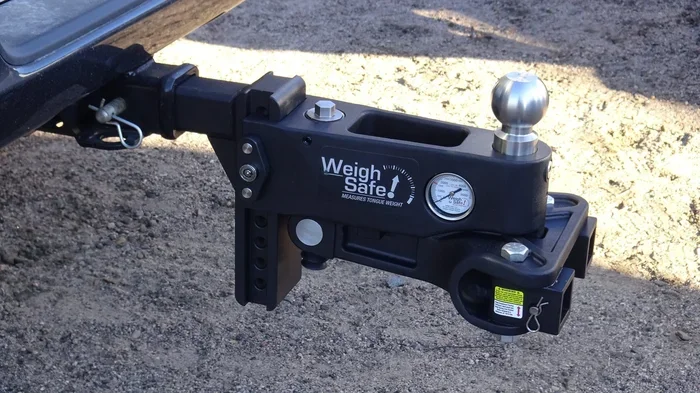
A dedicated tongue weight scale is the easiest and most accurate tool. You simply slide the scale under the hitch ball after you have hitched up the trailer. These scales are affordable and available at most auto parts stores. They give you a quick reading in seconds.
Method 2: The Bathroom Scale Method
If you do not have a tongue weight scale, you can use a standard bathroom scale. Here is how it works:
- Set a bathroom scale on a flat, level surface.
- Place a cinder block or pipe on the scale.
- Rest the trailer coupler on the block at the same height as your hitch ball.
- Read the scale and multiply by the ratio of the actual setup height to the scale height.
This method takes a little more effort, but it works well in a pinch. Many experienced towers use this approach regularly.
Method 3: Use a Weight Distribution Scale
Some truck stops and weigh stations have scales that can measure your full setup, including tongue weight. You can also use a load cell scale designed for towing. These digital scales provide precise readings and often include additional data like axle-by-axle weight breakdowns.
Quick Tips for Accurate Measurement
- Always measure tongue weight with the trailer fully loaded, just as you would when towing.
- Measure on a flat, level surface for the most accurate results.
- Check your tongue weight before every trip. Load changes can shift weight around.
- Keep a record of your measurements so you can spot trends over time.
What Happens When Tongue Weight Is Too Low?
Insufficient tongue weight is one of the most common and most dangerous towing problems. When the tongue weight drops below 10 percent of your trailer weight, your setup becomes unstable. The trailer has too much freedom to move independently of your tow vehicle.
Trailer Sway: The #1 Risk
Low tongue weight is the primary cause of trailer sway. Trailer sway happens when the trailer begins to oscillate side to side behind your vehicle. At first, it might be a slight wobble. But at highway speeds, it can quickly escalate into a violent side-to-side motion that is nearly impossible to correct.
Wind gusts, passing trucks, and slight road curves can all trigger trailer sway. When your tongue weight is too low, there is not enough downward force on the hitch to keep the trailer tracking straight behind your vehicle.
Other Problems Caused by Low Tongue Weight
- Poor steering response: Your tow vehicle may feel loose or unresponsive in turns.
- Rear-end lightness: The back of your vehicle lifts, reducing traction on the rear wheels.
- Increased stopping distance: With less weight on the rear axle, your brakes are less effective.
- Jackknifing risk: In extreme cases, the trailer can swing around and hit your tow vehicle from behind.
If you notice any of these symptoms, stop and check your tongue weight immediately. Adjusting your cargo load can often solve the problem quickly.
What Happens When Tongue Weight Is Too High?
While low tongue weight gets most of the attention, excessive tongue weight is equally problematic. When tongue weight exceeds 15 percent of your trailer weight, you overload the rear axle of your tow vehicle. This creates a different set of dangers.
Effects of Excessive Tongue Weight
- Rear axle overload: Your rear tires wear faster, and your suspension components take a beating.
- Reduced front-wheel traction: Too much weight on the rear lifts the front axle, reducing steering grip.
- Brake imbalance: Your rear brakes do more work, which can lead to overheating and brake fade on long descents.
- Headlight aim changes: Your vehicle sits rear-heavy, pointing headlights up instead of straight ahead.
Excessive tongue weight can also push your total setup over your vehicle’s gross vehicle weight rating, or GVWR. This is a legal and safety issue. Overweight vehicles are illegal on most roads and can result in fines, not to mention the increased risk of mechanical failure.
How to Fix Excessive Tongue Weight
If your tongue weight is too high, you have a few options:
- Move cargo forward: Shift some of the heavy items toward the center or rear of the trailer.
- Use a weight distribution hitch: This device redistributes tongue weight across all axles of both vehicles.
- Reduce trailer load: If possible, remove some weight from the trailer to bring tongue weight into the safe range.
How to Adjust Your Tongue Weight
Once you know your tongue weight number, the next step is adjusting it. Most of the time, a simple cargo rearrangement does the trick. Here is a step-by-step approach to getting your tongue weight for trailer towing right.
Step-by-Step Adjustment Process
- Weigh your trailer fully loaded on a truck scale or use individual axle scales.
- Measure your tongue weight using one of the methods described above.
- Calculate your tongue weight percentage using the formula provided earlier.
- If the percentage is below 10 percent, move heavy items forward toward the trailer axle.
- If the percentage is above 15 percent, move heavy items rearward or reduce total load.
- Recheck tongue weight after every adjustment.
- Repeat until your tongue weight falls within the 10 to 15 percent range.
Loading Tips for Balanced Tongue Weight
How you load your trailer matters just as much as how much you load. Keep these tips in mind:
- Place 60 percent of your cargo weight forward of the trailer axles and 40 percent behind them.
- Secure all cargo so it cannot shift during transit.
- Distribute weight evenly side to side to prevent pulling to one direction.
- Do not overload the trailer tongue with heavy items like tools or equipment.
- Use cargo nets, straps, and bungee cords to keep everything in place.
Tools and Accessories That Help Manage Tongue Weight
Several products can make managing tongue weight easier and safer. Here are the most useful ones every tow vehicle owner should consider:
Hitch Weight Scales
A dedicated hitch weight scale is the single most useful tool for tow vehicle owners. These scales range from simple mechanical designs to digital displays. Prices start around $20 and go up to $100 or more for professional-grade models. They are a small investment for a big safety payoff.
Weight Distribution Hitches
A weight distribution hitch is a system that uses spring bars to redistribute tongue weight across the tow vehicle’s front and rear axles, as well as the trailer’s axles. This system is especially helpful when your tow vehicle is near its payload limit. Popular brands include Equalizer, Reese, and Blue Ox.
Sway Control Devices
Even with proper tongue weight, trailer sway can occur. Sway control devices add resistance to the hitch to dampen side-to-side movement. These work best as a supplement to proper tongue weight, not a replacement for it.
Truck or Trailer Scales
For the most accurate measurements, visit a truck scale at a weigh station or truck stop. These scales can weigh your entire setup axle by axle, giving you a complete picture of your weight distribution. Many scales charge just a few dollars per use.
Common Mistakes People Make With Tongue Weight
Even experienced towers make mistakes when it comes to tongue weight. Here are the most common errors and how to avoid them:
Mistake 1: Guessing Instead of Measuring
Never guess your tongue weight. Feel alone is not reliable. Always use a scale or a measurement tool to get an accurate number. Many towing accidents happen because drivers assumed their setup was balanced when it was not.
Mistake 2: Ignoring Vehicle Payload Capacity
Your tow vehicle has a maximum payload capacity listed in the owner manual. This number includes the tongue weight plus the weight of passengers and gear in the vehicle. Exceeding payload capacity is just as dangerous as having incorrect tongue weight.
Mistake 3: Loading the Trailer with Too Much Weight at the Back
Placing heavy items at the rear of the trailer reduces tongue weight and invites sway. Always load heavy items over or just forward of the trailer axles.
Mistake 4: Not Rechecking After Loading Changes
If you add or remove cargo, your tongue weight changes. Always recheck after any modification to your load. What was balanced yesterday might not be balanced today.
Mistake 5: Forgetting About Cargo Shift During Transit
Cargo can shift during a long drive. Secure everything tightly and check your load at rest stops. A shifted load changes your tongue weight on the fly, which is a safety risk.
Expert Insights on Tongue Weight Management
Experienced towers and towing safety experts agree on a few key principles when it comes to managing acceptable tongue weight:
- Measure before every trip: Do not assume your setup is the same as last time. Conditions change, loads change, and so should your checks.
- Invest in a quality scale: A good hitch weight scale pays for itself the first time it prevents a problem.
- Understand your vehicle’s limits: Read your owner manual thoroughly. Know your payload capacity, towing capacity, and GVWR inside and out.
- When in doubt, reduce load: It is always better to tow with less weight than to push your limits. Safety should always come first.
- Practice in a safe area: Before hitting the highway, practice towing in an empty parking lot. Get a feel for how your setup handles.
Tongue weight management is not complicated, but it does require attention and consistency. Make it a habit to check before every trip, and you will enjoy safer, more confident towing experiences.
Final Thoughts on Acceptable Tongue Weight
Acceptable tongue weight is the backbone of safe and effective trailer towing. Remember the 10 to 15 percent rule, measure your tongue weight before every trip, and make adjustments as needed. A well-balanced trailer tow setup gives you confidence, control, and peace of mind on the road.
Do not let tongue weight be the thing you overlook. Take the time to measure, adjust, and verify. Your safety, your passengers, and everyone else on the road depend on it. Towing is a privilege and a responsibility. Get the tongue weight right, and everything else falls into place.
Now that you understand acceptable tongue weight for trailer towing, you are better equipped to hit the road safely. Share this guide with fellow towers, and always prioritize safety over convenience. Happy towing!
Frequently Asked Questions
What happens if tongue weight is too low?
Low tongue weight causes trailer sway, which is when the trailer oscillates side to side behind your vehicle. This is extremely dangerous at highway speeds and can lead to loss of control or a jackknife accident. Always ensure your tongue weight is at least 10 percent of your trailer’s gross weight.
Can I use a regular bathroom scale to measure tongue weight?
Yes, you can use a bathroom scale with a simple setup involving a cinder block and a pipe to replicate the hitch height. This method works well for lighter trailers. For heavier setups, a dedicated tongue weight scale or a truck scale gives more accurate results.
Does tongue weight affect my tow vehicle’s braking?
Absolutely. Tongue weight affects how your vehicle’s weight is distributed across all axles. Too little tongue weight reduces rear traction and braking effectiveness. Too much tongue weight overloads the rear axle and can cause brake fade. Proper tongue weight ensures balanced braking performance.
What is the difference between tongue weight and hitch weight?
Tongue weight and hitch weight are the same thing. Both refer to the downward force the trailer puts on the hitch ball. Some people use the terms interchangeably, and they mean the same measurement in your towing setup.
Do I need a weight distribution hitch for proper tongue weight?
Not always. A weight distribution hitch helps redistribute tongue weight across all axles, which is useful when you are near your vehicle’s payload limit. However, proper tongue weight starts with correct cargo loading. A weight distribution hitch is a supplement, not a substitute for good loading practices.
How often should I check my tongue weight?
You should check your tongue weight before every trip. Even small changes in cargo placement can shift your tongue weight significantly. Making it a pre-trip habit keeps you safe and prevents surprises on the road.
=== CONCLUSION ===
Acceptable tongue weight is one of the most important aspects of safe trailer towing. Keeping your tongue weight between 10 and 15 percent of your trailer’s gross weight ensures stability, control, and peace of mind. Use a tongue weight scale, adjust your cargo placement, and never guess. Your safety and the safety of others on the road depend on getting this number right. Make tongue weight checks a non-negotiable part of your towing routine, and enjoy every journey with confidence.