How to Fix Electronic Throttle Control on Your Jeep
Electronic throttle control issues on your Jeep can cause jerky acceleration, warning lights, and poor engine response. This guide walks you through the symptoms, causes, and fixes so you can get back on the road safely. You will learn how to reset the system, when to clean the throttle body, and when to replace parts entirely.
Have you ever pressed the gas pedal in your Jeep and felt a strange hesitation? Or maybe the check engine light popped on and you had no idea why. These are common signs of electronic throttle control problems. If you own a Jeep, you are not alone in dealing with this issue. Many Jeep owners face throttle control trouble at some point. The good news is that most fixes are simple and affordable.
In this guide, we will walk you through everything you need to know about fixing electronic throttle control on your Jeep. We will cover the symptoms to watch for, the root causes, and step-by-step fixes you can do at home. By the end, you will feel confident tackling this problem head-on. Let us get started.
Key Takeaways
- Recognize the symptoms early: warning lights, rough idle, and sluggish acceleration are signs of throttle control problems.
- Resetting the system often works: a simple throttle body reset can resolve many electronic throttle control issues.
- Dirty throttle body is a common culprit: carbon buildup restricts airflow and causes poor engine performance.
- Know when to replace vs. repair: some parts like the throttle position sensor may need full replacement.
- Preventive maintenance saves money: regular cleaning and inspections keep the throttle system running smoothly.
- Safety matters: a failing throttle control can affect your ability to respond quickly while driving.
📑 Table of Contents
- What Is Electronic Throttle Control?
- Common Symptoms of Electronic Throttle Control Problems
- Causes of Electronic Throttle Control Failure on a Jeep
- Step-by-Step Fix: How to Reset Electronic Throttle Control
- How to Clean the Throttle Body
- When to Replace the Throttle Body or Sensors
- Preventing Electronic Throttle Control Problems
- Understanding the Role of the ECM in Throttle Control
- Is It Safe to Drive with a Throttle Control Fault?
- Final Thoughts on Fixing Electronic Throttle Control
What Is Electronic Throttle Control?
Electronic throttle control, also called drive-by-wire, replaces the traditional cable linkage between your gas pedal and engine. Instead of a physical cable, sensors and a control module manage how much air enters the engine. When you press the accelerator pedal, sensors send signals to the throttle control module. The module then opens the throttle butterfly valve to let in more air. This process happens in milliseconds.
This system offers better fuel efficiency and smoother engine response. However, because it relies on electronics, it can develop issues over time. Sensors can get dirty. Wiring can corrode. The control module can malfunction. Understanding how the system works helps you diagnose problems faster.
If you have ever wondered at what speed a hybrid switches from electric to gas, the throttle control system plays a similar role in managing engine power delivery. Both systems rely on electronic sensors to make real-time decisions about fuel and air flow.
Common Symptoms of Electronic Throttle Control Problems
Knowing the warning signs early can save you from bigger repairs down the road. Here are the most common symptoms of electronic throttle control issues on a Jeep.
Check Engine Light
The check engine light is often the first sign something is wrong. The throttle control module detects a fault and triggers the light. Do not ignore this warning. It could be a minor sensor issue or something more serious.
Rough or Unstable Idle
If your Jeep idles roughly or stalls at stoplights, the throttle body may not be regulating airflow properly. A dirty or faulty throttle body often causes this symptom.
Sluggish or Hesitant Acceleration
When you press the gas pedal and feel a delay before the engine responds, that is a red flag. The accelerator pedal position sensor may not be sending accurate signals to the throttle body.
Limp Mode Activation
Many Jeeps enter limp mode when the throttle control system fails. This limits engine power to protect the vehicle. You will notice a significant drop in performance and top speed.
Unusual Throttle Response
If the pedal feels spongy, stiff, or unresponsive, the electronic throttle system may be malfunctioning. This is a safety concern that needs immediate attention.
Causes of Electronic Throttle Control Failure on a Jeep
Several factors can lead to throttle control problems on a Jeep. Understanding the causes helps you target the right fix. Here are the most common reasons.
Dirty or Carbon-Buildup Throttle Body
Over time, carbon deposits build up inside the throttle body. This restricts the butterfly valve from opening and closing smoothly. Dirty throttle bodies are the number one cause of electronic throttle control issues. It especially affects older Jeeps or those with high mileage.
Faulty Throttle Position Sensor
The throttle position sensor tells the control module how far the throttle valve is open. When this sensor fails, the module cannot regulate air intake properly. A bad sensor will often trigger the check engine light and cause erratic throttle behavior.
Wiring or Connector Problems
The electronic throttle system relies on wiring harnesses and connectors. Corrosion, fraying, or loose connections can disrupt the signal between the pedal sensor and the throttle body. This is common in Jeeps that have been driven in wet or off-road conditions.
Bad Accelerator Pedal Position Sensor
The accelerator pedal position sensor reads how far you press the gas pedal. If this sensor fails, the throttle body will not know how much air to let in. This can cause complete loss of throttle response or intermittent surging.
Faulty Throttle Control Module
In rare cases, the throttle control module itself fails. This is the brain of the electronic throttle system. A failed module needs professional diagnosis and often replacement. This is the least common cause but the most expensive to fix.
Electrical Gremlins from Off-Roading
Jeep owners love hitting the trails. But off-roading exposes electrical components to mud, water, and debris. This can damage sensors and connectors in the throttle system. If you are an off-road enthusiast, this is worth keeping in mind.
Interestingly, many of these electrical issues are similar to problems caused by accidents. For instance, hitting a deer can total your car and damage wiring harnesses, including those connected to the throttle system. Even a minor collision can jostle sensors and connectors enough to cause throttle control faults.
Step-by-Step Fix: How to Reset Electronic Throttle Control
Resetting the electronic throttle control is often the first step. Many Jeep owners resolve the issue with a simple reset. Here is how to do it.
- Turn off the engine. Make sure the Jeep is parked and the key is removed from the ignition.
- Disconnect the negative battery terminal. Use a wrench to loosen the clamp on the negative (black) battery cable.
- Wait for at least 15 minutes. This allows the control module to fully discharge and reset.
- Reconnect the battery terminal. Tighten the clamp securely and make sure there is no corrosion on the connector.
- Start the engine. Let the Jeep idle for a few minutes without pressing the gas pedal.
- Test drive the vehicle. Press the accelerator gently and check for smooth response.
This reset clears error codes and allows the throttle body to recalibrate. If the problem was a temporary sensor glitch, this will fix it. If the light comes back on, you need to dig deeper.
Quick Tips for a Successful Reset
- Make sure the battery is fully charged before disconnecting it.
- Do not turn the key to the ON position while the battery is disconnected.
- After reconnecting, wait at least 30 seconds before starting the engine.
- If the check engine light stays on after the reset, use an OBD-II scanner to read the codes.
How to Clean the Throttle Body
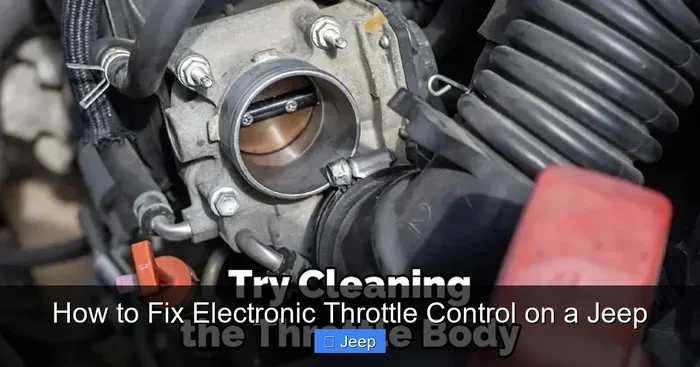
A dirty throttle body is the most common cause of electronic throttle control issues. Cleaning it is simple and costs under $20. Here is what you need to do.
What You Will Need
- Throttle body cleaner spray
- Clean lint-free cloths
- A small brush (an old toothbrush works great)
- Safety gloves and eye protection
Step-by-Step Cleaning Process
- Locate the throttle body. It is attached to the intake manifold. Follow the large air duct from the engine to find it.
- Remove the air intake duct. Loosen the clamps and carefully pull the duct off the throttle body.
- Spray throttle body cleaner. Hold the can about six inches away and spray the inside of the throttle body. Focus on the butterfly valve and the walls.
- Let the cleaner soak for 30 seconds. This breaks down carbon deposits and grime.
- Wipe clean with a lint-free cloth. Use gentle circular motions. Do not let any cleaner drip onto electronic components.
- Use a brush for stubborn deposits. Gently scrub areas with heavy carbon buildup.
- Reattach the air intake duct. Make sure all clamps are tight and the seal is secure.
- Reset the throttle control. Follow the reset steps from the previous section.
After cleaning, the throttle body should open and close smoothly. You should notice improved throttle response and smoother idle. If the problem persists after cleaning, the issue may be a faulty sensor or wiring problem.
When to Replace the Throttle Body or Sensors
Sometimes cleaning is not enough. If the throttle body is damaged or sensors have failed, replacement is the best option. Here is how to decide.
Signs You Need a Replacement
- The check engine light returns after a reset and cleaning.
- You get error codes pointing to the throttle position sensor or accelerator pedal sensor.
- The throttle body has physical damage like cracks or a stuck butterfly valve.
- Cleaning does not improve throttle response at all.
- You notice metal shavings or excessive wear inside the throttle body.
Replacing the Throttle Position Sensor
The throttle position sensor is a small but critical component. It is usually mounted on the throttle body and can be replaced independently. The cost is typically between $50 and $200 for parts. A mechanic can install it in about an hour.
Replacing the Throttle Body
If the entire throttle body needs replacement, expect to pay between $300 and $800 for parts and labor. The throttle control module will need to be reprogrammed after installation. This ensures the new throttle body calibrates correctly with the engine control unit.
Replacing the Accelerator Pedal Position Sensor
This sensor is built into the accelerator pedal assembly. Replacement costs range from $150 to $400. The good news is that it is a straightforward repair and does not require extensive labor.
Understanding the cost of repairs can help you plan your budget. Similarly, knowing the financial impact of other vehicle issues, like whether you can deduct vehicle sales tax on your federal return, helps Jeep owners manage overall vehicle ownership costs more effectively.
Preventing Electronic Throttle Control Problems
Prevention is always better than repair. Here are simple steps to keep your electronic throttle control system in top shape.
Keep the Throttle Body Clean
Clean the throttle body every 30,000 miles or as part of your regular maintenance schedule. This prevents carbon buildup and keeps the butterfly valve operating smoothly.
Check Wiring and Connectors Regularly
Inspect the wiring harnesses and connectors for corrosion or damage. This is especially important if you drive your Jeep off-road or in wet conditions. A quick visual inspection during oil changes can catch problems early.
Use Quality Fuel and Air Filters
Clean fuel and air filters ensure proper engine combustion. Contaminated fuel can increase carbon deposits in the throttle body and intake system. Replace filters according to the manufacturer’s recommendations.
Address Warning Signs Immediately
Do not wait for the problem to get worse. If you notice rough idle, hesitation, or a check engine light, address it right away. Early intervention prevents minor issues from becoming expensive repairs.
Protect Electrical Components Off-Road
If you enjoy off-roading, consider adding waterproof covers or seals to electrical connectors near the throttle body. Mud and water are the biggest enemies of electronic systems.
Understanding the Role of the ECM in Throttle Control
The engine control module, or ECM, is the brain behind the electronic throttle control system. It processes signals from the accelerator pedal position sensor and the throttle position sensor. Based on these inputs, the ECM tells the throttle body how wide to open the butterfly valve.
When the ECM receives conflicting or faulty signals, it triggers a throttle control fault. This is why accurate sensor data is so important. A malfunctioning sensor does not just affect throttle response. It can also impact fuel delivery and overall engine performance.
If you suspect the ECM is the problem, a professional diagnostic scan is essential. ECM issues are less common but more complex to fix. Reprogramming or replacing the ECM can be costly, but it is sometimes the only solution for persistent throttle control faults.
Is It Safe to Drive with a Throttle Control Fault?
This is a question many Jeep owners ask. The short answer is: it depends on the severity of the issue.
If the check engine light is on and the throttle response feels normal, you can usually drive carefully to a repair shop. However, if the Jeep goes into limp mode or the throttle becomes unresponsive, you should not drive it. A sudden loss of throttle control while driving is dangerous.
Always prioritize safety. If you are unsure about the severity of the problem, have the Jeep towed to a trusted mechanic. It is better to be safe than sorry.
Understanding throttle response and engine power delivery also helps in other driving scenarios. For example, knowing when the hybrid escape switches to gas can give you a broader understanding of how electronic systems manage engine power. Both systems rely on sensors and control modules to deliver the right amount of power at the right time.
Final Thoughts on Fixing Electronic Throttle Control
Fixing electronic throttle control on your Jeep does not have to be overwhelming. Most issues stem from a dirty throttle body, a faulty sensor, or a simple wiring problem. Start with a reset and a throttle body cleaning. These two steps resolve the majority of cases.
If those fixes do not work, dig deeper into sensor diagnostics. Replace any faulty sensors or damaged wiring you find. And remember, prevention through regular maintenance is your best defense against future throttle control problems.
Your Jeep is built to handle tough conditions. With the right knowledge and a little elbow grease, you can keep the electronic throttle control system running smoothly for years to come. Do not let a throttle control fault slow you down. Take action today and get back to enjoying the drive.
Frequently Asked Questions
What does electronic throttle control mean on a Jeep?
Electronic throttle control means the Jeep uses sensors and a control module instead of a physical cable to manage how much air enters the engine. When you press the gas pedal, sensors send signals to the throttle body, which opens the butterfly valve to regulate airflow. This system, also called drive-by-wire, provides smoother acceleration and better fuel efficiency compared to traditional cable-linked throttles.
Can I drive my Jeep with a throttle control fault?
It depends on the severity. If the check engine light is on but throttle response feels normal, you can usually drive carefully to a repair shop. However, if the Jeep enters limp mode or the throttle becomes unresponsive, do not drive it. A sudden loss of throttle control is a safety hazard. When in doubt, have the vehicle towed to a trusted mechanic.
How much does it cost to fix electronic throttle control on a Jeep?
The cost varies depending on the cause. A throttle body cleaning costs under $20 if you do it yourself. Sensor replacements typically range from $50 to $400 for parts. A full throttle body replacement can cost between $300 and $800 including labor. ECM replacement is the most expensive, often costing $500 or more. Regular maintenance helps keep costs low.
How do I reset the electronic throttle control on my Jeep?
Start by turning off the engine and disconnecting the negative battery terminal. Wait at least 15 minutes for the control module to fully discharge. Reconnect the battery terminal securely and start the engine. Let the Jeep idle for a few minutes without pressing the gas pedal. Test drive the vehicle gently to check for smooth throttle response. If the check engine light returns, use an OBD-II scanner to read the fault codes.
What causes the electronic throttle control light to come on?
The most common causes include a dirty throttle body, a faulty throttle position sensor, bad wiring or connectors, and a failing accelerator pedal position sensor. Carbon buildup, corrosion from off-roading, and electrical gremlins can also trigger the light. In rare cases, the throttle control module itself may fail. Using an OBD-II scanner helps identify the specific cause.
How often should I clean the throttle body on my Jeep?
It is recommended to clean the throttle body every 30,000 miles as part of regular maintenance. However, if you frequently drive in dusty or off-road conditions, you may need to clean it more often. Signs that your throttle body needs cleaning include rough idle, sluggish acceleration, and a check engine light. Regular cleaning prevents carbon buildup and keeps the throttle system operating smoothly.
=== CONCLUSION ===
Electronic throttle control problems on your Jeep are frustrating but manageable. By understanding the symptoms, identifying the root causes, and following the fixes outlined in this guide, you can save time and money. Start with a simple reset and throttle body cleaning. Move to sensor replacement if needed. And always prioritize preventive maintenance to keep your Jeep running its best.
Now that you know how to fix electronic throttle control issues, you are equipped to handle the problem with confidence. Take action today and enjoy a smooth, responsive ride in your Jeep once again.