Can I Check Transmission Fluid Myself At Home Today
Yes, you can absolutely check your transmission fluid yourself at home — and it is easier than most people think. This guide walks you through every step, from locating the dipstick to reading fluid levels correctly. You will learn what healthy fluid looks like, when to add more, and how to avoid costly mistakes.
Your car’s transmission is one of the most hardworking parts under the hood. It shifts gears smoothly so you can accelerate, cruise, and navigate traffic without a second thought. But here is the thing — most people forget about their transmission until something goes wrong. By then, repair bills can easily climb into the thousands.
Checking your transmission fluid yourself at home is one of the simplest ways to keep your transmission healthy. It takes less than ten minutes, requires no special skills, and can catch problems before they become disasters. Whether you drive an automatic or a manual, this guide will show you exactly how to do it right.
So grab a clean rag, pop your hood, and let us walk through this together. By the end of this article, you will know everything you need to confidently check your transmission fluid level and condition on your own.
Key Takeaways
- Checking transmission fluid at home is simple: You need just a few minutes and basic tools.
- Engine temperature matters: Always check fluid with the engine warm and running for accurate readings.
- Fluid color and smell tell a story: Bright red and smooth means good; dark brown or burnt smell means trouble.
- Overfilling is just as bad as underfilling: Too much fluid can cause foaming and transmission damage.
- Not all cars have a dipstick: Some newer vehicles use sealed transmissions that require a professional.
- Regular checks prevent expensive repairs: Catching low fluid early saves you from rebuild costs.
📑 Table of Contents
- Why Checking Transmission Fluid Matters
- What You Need Before You Start
- Step-by-Step: How to Check Transmission Fluid at Home
- Automatic vs Manual Transmission Fluid Checks
- Common Mistakes People Make When Checking Transmission Fluid
- When to See a Professional
- How Transmission Fluid Degrades Over Time
- Quick Tips for Maintaining Healthy Transmission Fluid
- Conclusion
Why Checking Transmission Fluid Matters
Your transmission relies on fluid to do its job. That fluid lubricates all the moving parts inside, keeps things cool, and creates the hydraulic pressure needed to shift gears. When the fluid level drops or the fluid degrades, your transmission starts to suffer.
Here is what can happen if you ignore your transmission fluid check:
- Gear slipping: Your transmission may hesitate or slip between gears while driving.
- Rough shifting: You might feel jerky or harsh transitions when changing gears.
- Overheating: Old or low fluid loses its ability to cool the transmission properly.
- Complete failure: In worst cases, running on low fluid can destroy the transmission entirely.
The good news? All of these problems are preventable. A simple check transmission fluid routine catches issues early. Think of it like checking your engine oil — it is just part of basic car maintenance that keeps your vehicle running strong.
How Often Should You Check It?
Most manufacturers recommend checking your transmission fluid every 30,000 to 60,000 miles. However, if you drive in extreme conditions — like heavy traffic, towing, or very hot weather — you should check it more often. A quick visual inspection every few weeks takes almost no time and gives you peace of mind.
What You Need Before You Start
Before you get under the hood, gather a few simple items. You do not need any fancy tools or expensive equipment. Here is your checklist:
- A clean rag or paper towel — for wiping the dipstick clean.
- A funnel — in case you need to add more fluid.
- The right type of transmission fluid — check your owner’s manual for the exact specification.
- A flat, level surface — so your readings are accurate.
- About 10 minutes of time — seriously, that is all it takes.
One important tip: never check transmission fluid right after a long drive when the engine is scorching hot. Let it cool down for a few minutes so you do not burn yourself. But do not let it sit overnight either, because the reading needs to be taken with the engine at normal operating temperature.
Step-by-Step: How to Check Transmission Fluid at Home
Now let us get into the actual process. Follow these steps carefully and you will get an accurate reading every time.
Step 1: Park on a Level Surface
This might seem obvious, but it is critical. If your car is on a slope, the fluid will settle unevenly and give you a false reading. Park on flat ground, engage the parking brake, and make sure the car is not rolling.
Step 2: Start the Engine and Let It Warm Up
Start your engine and let it idle for a few minutes. Most vehicles need the transmission fluid to be warm for an accurate reading. The engine should reach normal operating temperature — you will see the temperature gauge settle into the normal range.
Keep the engine running throughout this process. Some people turn the engine off before checking, but for most automatic transmissions, the fluid needs to be warm and circulating.
Step 3: Locate the Transmission Dipstick
Open your hood and look for the transmission dipstick. It is usually located near the back of the engine bay, toward the passenger side for front-wheel-drive vehicles. The handle is often colored — red or yellow — so it is easier to spot than the oil dipstick.
If you cannot find it, consult your owner’s manual. Some newer vehicles, particularly certain BMW, Audi, and Mercedes models, do not have a traditional dipstick. They use sealed transmissions that require a professional to check.
Step 4: Pull the Dipstick and Wipe It
Pull the dipstick out completely. Use your clean rag to wipe it thoroughly from end to end. This removes any old fluid so you can get a clean reading on the second pull.
Step 5: Reinsert and Pull Again
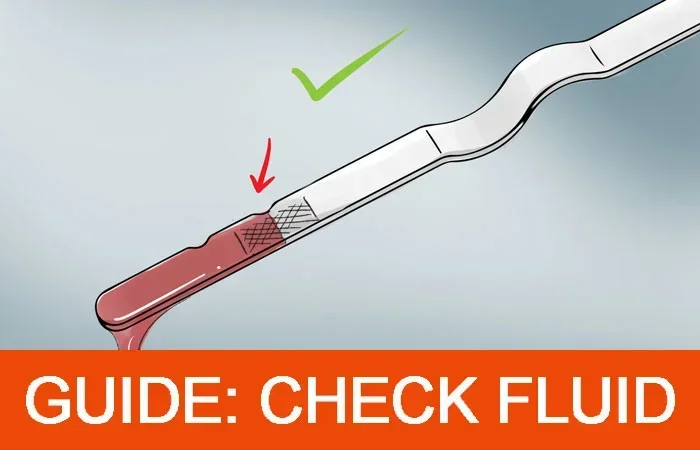
Slide the dipstick all the way back in, then pull it out again. Look at the fluid on the end of the stick. You will see two marks — usually small holes or a crosshatched area — that indicate the full and low levels.
The fluid should fall between those two marks. If it is below the lower mark, you need to add more fluid.
Step 6: Check the Fluid Color and Smell
This is just as important as checking the level. Healthy transmission fluid should be:
- Color: Bright red or translucent pink.
- Consistency: Smooth and slippery, similar to engine oil but thinner.
- Smell: Neutral or slightly sweet. No burning odor.
If the fluid looks dark brown or black, that is a sign of old fluid that needs changing. If it smells burnt, your transmission may be overheating. And if you see any metal particles or grit, that could indicate internal wear — time to see a mechanic.
Step 7: Add Fluid if Needed
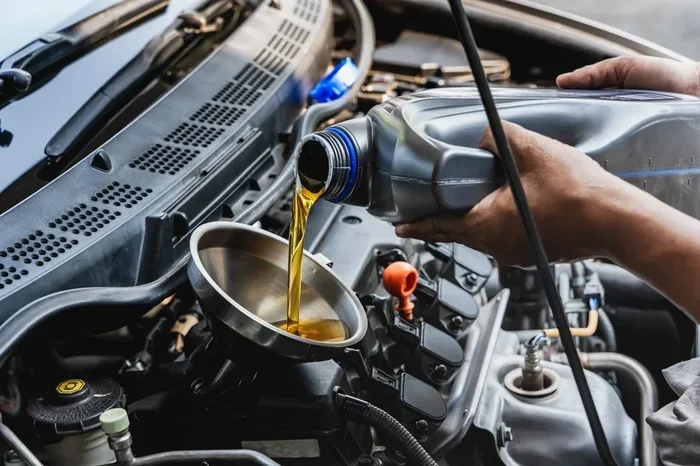
If your fluid level is low, use a funnel to add the correct type of transmission fluid. Pour slowly and check the level frequently. It is much easier to add a little at a time than to deal with an overfill situation.
Do not overfill. Too much fluid can cause foaming, which leads to poor lubrication and pressure problems. If you accidentally add too much, you may need to drain the excess.
Automatic vs Manual Transmission Fluid Checks
Not all transmissions are the same, and the process can differ depending on your vehicle type.
Checking Automatic Transmission Fluid
Most automatic transmissions use a dipstick, and the process we described above applies. The fluid serves both as a lubricant and hydraulic fluid, so its condition directly affects shifting performance.
Automatic transmission fluid (ATF) comes in many varieties — Dexron, Mercon, ATF+4, and others. Always use the exact type recommended by your vehicle manufacturer. Using the wrong fluid can damage internal components and void your warranty.
Checking Manual Transmission Fluid
Manual transmissions are a bit different. Many do not have a dipstick at all. Instead, they have a fill plug on the side of the transmission housing. To check the fluid level, you typically need to remove the plug and look inside or use a finger to feel for fluid level.
Manual transmissions often use gear oil rather than traditional ATF. Check your owner’s manual to confirm the correct fluid type. If you are unsure, a quick visit to a mechanic can handle this for you.
Common Mistakes People Make When Checking Transmission Fluid
Even though checking fluid seems straightforward, people make mistakes that lead to inaccurate readings or damage. Here are the most common ones to avoid:
- Checking with the engine off: This gives a false low reading because the fluid has settled. Always check with the engine running and warm.
- Not parking on a level surface: An uneven surface skews the dipstick reading significantly.
- Using the wrong fluid type: Not all transmission fluids are interchangeable. Mixing types can cause compatibility issues.
- Ignoring the fluid condition: Level is only half the battle. The color and smell tell you a lot about the health of your transmission.
- Overfilling: Adding too much fluid is just as dangerous as having too little. It can cause foaming and pressure loss.
If you are ever unsure about anything, it is always okay to consult a professional. You can also check out our article on Can I Use 5W30 Instead Of 5W20 if you want to learn more about checking and comparing different automotive fluids.
When to See a Professional
Checking your transmission fluid at home is great for routine maintenance. But there are times when you should leave it to the experts.
Consider visiting a mechanic if you notice any of these warning signs:
- Fluid is very dark or black: This suggests the fluid is severely degraded and needs a full change.
- Burnt smell: A burning odor indicates overheating, which can cause internal damage.
- Metal particles in the fluid: This is a sign of significant internal wear.
- Persistent low fluid levels: If you keep needing to add fluid, you may have a leak that needs professional attention.
- No dipstick available: Some vehicles have sealed transmissions that require special equipment to service.
Also, if your check engine light is on along with transmission concerns, do not ignore it. A code like a P0171 might point to related issues that need a diagnostic scan. You can learn more about driving with certain codes in our article Can I Still Drive With A P0171 Code.
Regular transmission fluid changes are another service worth leaving to professionals every 60,000 miles or so. A full fluid flush removes old, contaminated fluid much more thoroughly than a simple drain and refill.
How Transmission Fluid Degrades Over Time
Transmission fluid does not last forever. Over time, heat, friction, and contamination break it down. Here is a simple breakdown of what happens:
- Fresh fluid (0–30,000 miles): Bright red, smooth, and full of protective additives.
- Aging fluid (30,000–60,000 miles): Starts to darken slightly. Additives begin to deplete. Still functional but approaching change time.
- Old fluid (60,000+ miles): Dark brown or black. Additives are exhausted. The fluid loses its lubricating and cooling abilities.
- Contaminated fluid: Contains metal particles, sludge, or debris from internal wear. Needs immediate attention.
Staying on top of your fluid condition through regular transmission fluid checks at home helps you know exactly where your fluid stands in this lifecycle. It also saves you money by catching problems before they escalate into full rebuilds.
Quick Tips for Maintaining Healthy Transmission Fluid
- Make it a habit to check your transmission fluid level once a month along with your engine oil.
- Always use the manufacturer-recommended fluid type — never guess.
- Keep your engine at a healthy operating temperature. Overheating is one of the biggest enemies of transmission fluid.
- If you tow heavy loads, check your fluid more frequently because towing puts extra stress on the transmission.
- Do not ignore small leaks. A few drops under your car could mean a seal is failing.
- Consider a professional fluid change every 50,000 to 60,000 miles for optimal transmission longevity.
If you want to learn more about general vehicle care, our article on Can I Put 93 Gas In My Car covers another common car maintenance question that many drivers have.
Conclusion
Checking your transmission fluid yourself at home is one of the easiest and most impactful things you can do for your vehicle. It takes just a few minutes, requires no special skills, and gives you valuable insight into the health of your transmission.
Remember to check the fluid with the engine warm and running, on a level surface. Look at both the level and the condition — color, consistency, and smell all matter. Add fluid when needed using the correct type, and never overfill. And if you notice anything unusual, do not hesitate to seek professional help.
Staying proactive with your transmission fluid check routine is one of the best investments you can make in your vehicle’s longevity. Your transmission works hard for you every day. A little attention goes a long way toward keeping it running smoothly for years to come.
For more helpful car maintenance tips, explore our other articles on topics like Can I Use Unleaded 88 In My Car and Can I Drive My Car After It Overheats to keep your vehicle in top shape.
Frequently Asked Questions
Can I check my transmission fluid with the engine off?
For most automatic transmissions, you should check the fluid with the engine running and warm. Checking it with the engine off can give you a false low reading because the fluid settles when the engine is not running. Always follow the specific procedure in your owner’s manual.
What does healthy transmission fluid look like?
Healthy transmission fluid should be bright red or translucent pink. It should feel smooth and slippery between your fingers and have a neutral or slightly sweet smell. Dark brown, black, or burnt-smelling fluid is a sign that it needs to be changed.
How often should I check my transmission fluid?
Most experts recommend checking your transmission fluid once a month as part of your regular car maintenance routine. A more thorough fluid change is typically recommended every 50,000 to 60,000 miles, but check your owner’s manual for your specific vehicle’s schedule.
Can I drive with low transmission fluid?
You should not drive with low transmission fluid. Low fluid causes poor lubrication, overheating, and can lead to serious internal damage. If your fluid is low, add the correct type immediately and have your vehicle inspected for leaks.
Do all cars have a transmission dipstick?
No, not all cars have a transmission dipstick. Many newer vehicles, especially those with sealed or continuously variable transmissions, do not have one. If your car does not have a dipstick, you will need a professional to check the fluid level.
What happens if I overfill my transmission fluid?
Overfilling transmission fluid causes foaming, which reduces lubrication and hydraulic pressure. This can lead to erratic shifting, overheating, and eventual transmission damage. If you accidentally overfill, you should drain the excess fluid to the correct level.